
About
About InfertilityInfertility is a common chronic disease in the age group 20-45 years, affecting one in four Nordic couples. In the future, even more are expected to suffer from infertility due to factors such as age, lifestyle, and environmental exposures. Projections show that due to an increased demand for fertility treatments the industry is expected to grow by approx. 16% globally between 2020-2027.
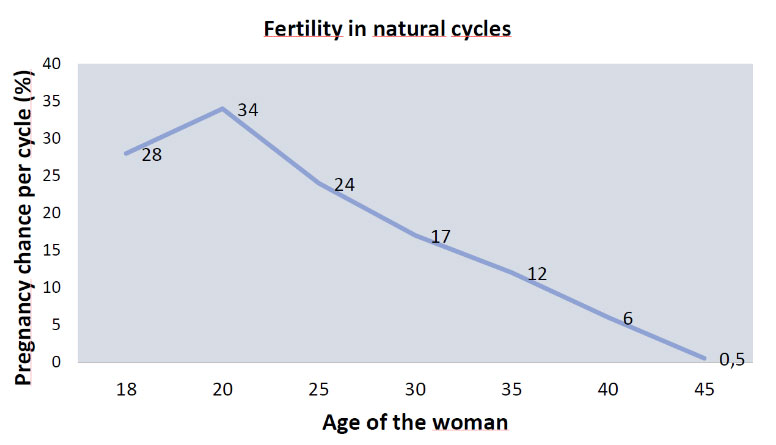
Women’s fertility peaks in the early 20s but then decreases with increasing age. Fertility is expressed as the chance of becoming pregnant by unprotected intercourse per cycle. It falls from approx. 34% in young women to less than 0.5% for women over 40 (Danish Fertility Society).
- About 10% of all children in Denmark - and 7% in Sweden - are conceived with help from a fertility clinic
- 10-20% of all couples trying to have children experience fertility problems
- In the Nordic countries, women get about 1.6 children. If we as a population are to reproduce ourselves, the figure must be approx. 2.1 children
- Every 5th man never gets children
- Every 10th woman never gets children, or gets fewer children than she wanted
- Studies show that the relatively high age is one of the major factors associated with fertility problems. But other factors, such as sexually transmitted diseases, obesity, smoking and the environment, affect both male and female fertility
- A Swedish survey shows that about 80-90% of women and men do not know or are wrong, when asked about the relationship between the woman’s age and fertility.