RUBIC
What is RUBIC?Advancing infertility research through couple-level data
Infertility affects 15–25% of all couples during their reproductive years and is recognised as a significant public health challenge. Involuntary childlessness reduces quality of life for the couples affected and carries substantial societal costs - in fertility treatments and in the comorbidities associated with infertility. Despite advances in treatment, the underlying causes remain poorly understood, and for approximately 30% of infertile couples, current treatments do not result in a live birth. RUBIC (ReproUnion Biobank and Infertility Cohort) was established to change that.
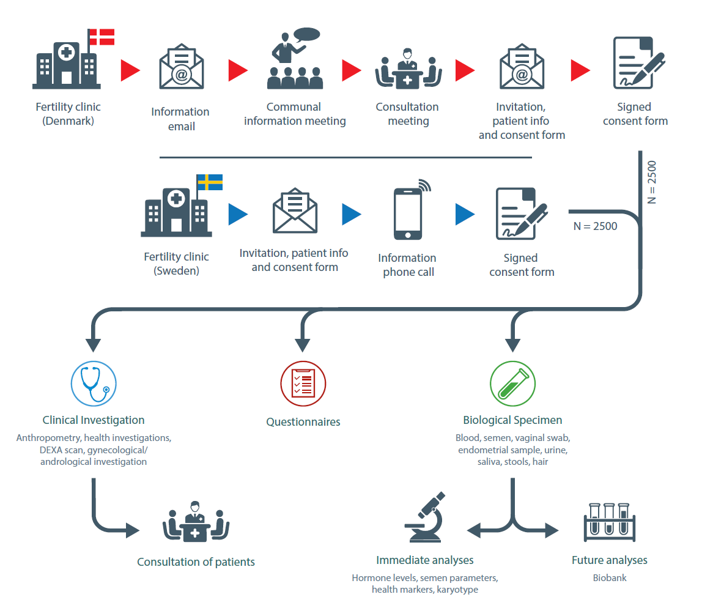
RUBIC is a binational research infrastructure combining biological samples, clinical data, questionnaire data, and journal data from infertile couples in Denmark and Sweden. What makes RUBIC unique is the couple-level design: both the woman and the man are examined separately through their respective clinical pathways but can be linked together in the same dataset. This approach to studying infertility at couple level does not exist anywhere else in the world.
By combining data from both partners, RUBIC enables researchers to study infertility as it occurs in reality - as a condition involving both the man and the woman. This creates the basis for a more complete understanding of its causes, and opens new possibilities for more precise diagnosis, targeted treatment, and better prevention.
A long-term investment in knowledge - Beyond fertility
RUBIC was established through collaboration between fertility clinics, hospitals, and research institutions in Denmark and Sweden. The aim is to include 5,000 couples equally from the two countries. Thousands of women and men have already contributed, and the data and biological material will form a scientific foundation for research that will generate value for decades to come. The more RUBIC is used, the greater the return on this investment.
The potential of RUBIC extends beyond infertility alone. Research shows that infertility can be associated with long-term health outcomes, including cardiovascular disease, metabolic disorders, and cancer. With RUBIC new knowledge about the connections between reproductive health, lifestyle, environmental factors, and disease across the life course will emerge - contributing to broader advances in public health.
RUBIC exists to improve outcomes for those experiencing involuntary childlessness due to biological infertility. The ambition is to generate knowledge that leads to better fertility care, more precise diagnosis, and stronger prevention -- so that more people can have the children they wish for.

Recruitment status