
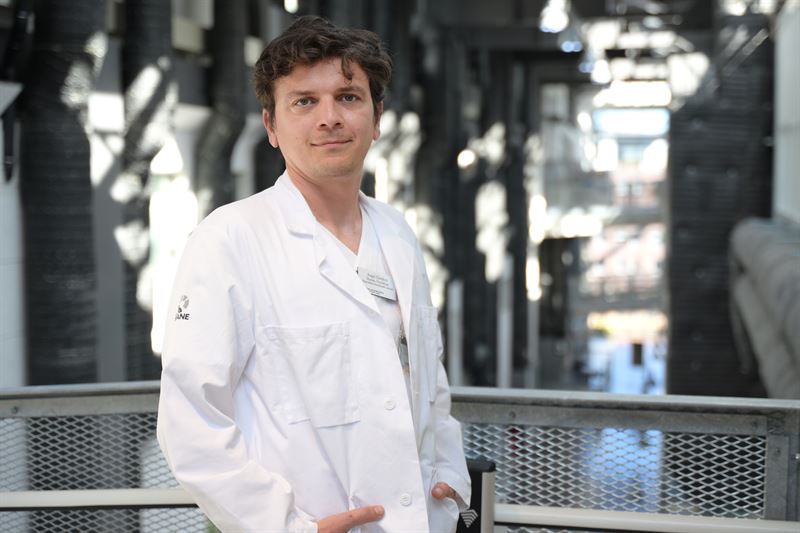
Angel Elenkov is Consultant andrologist and researcher at Skåne University Hospital und Lund University. We spoke with him about his journey into reproductive research and recent findings linking infertility and long-term disease risk.
You are an andrologist and researcher at the Centre for Reproductive Medicine (RMC) in Malmö. Can you tell us about your background?
I trained as a medical doctor in Bulgaria, where I developed an early interest in reproductive medicine and andrology. Over time, I became increasingly interested in the scientific questions behind infertility – not only how we treat it, but also what it can tell us about overall health. This curiosity led me to Sweden as a postdoc in early 2018, where I have continued my clinical work and combined it with research. This is essential, as it allows me to stay close to patients while also contributing to new knowledge that can improve care in the long term.
How did you become involved in ReproUnion and RUBIC – and how do you perceive this collaboration in the field of reproductive medicine?
ReproUnion has enabled me to take the step from ordinary clinical work to being at the forefront of reproductive research, as well as connecting with peers across borders. I believe the scientific output from ReproUnion is not only shaping how reproductive medicine evolves in the coming years, but also how fertility is perceived more broadly in society. What stands out is the scale and the level of integration across disciplines and countries. Bringing together clinicians, researchers, and data across Denmark and Sweden creates a foundation that is difficult to achieve within a single institution or healthcare system.
In particular, the ReproUnion Biobank & Infertility Cohort (RUBIC) provides a unique opportunity to follow both men and women over time, combining clinical and other data with biological samples. This kind of comprehensive approach allows us to ask more complex questions and generate insights that go beyond traditional fertility research.
This spring, you contributed to a study exploring the link between male infertility and cancer risk. What were the main findings – and why are they important?
In this study, we analysed data from more than one million men in Sweden and found that men with severely reduced fertility have an increased risk of developing certain types of cancer, including colorectal and thyroid cancer. This adds to a growing body of evidence showing that male infertility is not only a reproductive issue – but may also be linked to broader health risks. One of the key perspectives emerging from this research is that fertility, and particularly sperm quality, may serve as an early indicator of general health. The importance lies in shifting how we think about male infertility: from being a condition treated in isolation – to something that can provide important insights into long-term health.
How do you see these findings influencing future research and clinical practice?
Our findings highlight the need to look beyond fertility as a single outcome and instead consider it as part of a broader health picture. If impaired fertility can act as an early warning signal, it opens new possibilities for identifying individuals who may benefit from closer health monitoring or preventive interventions. At the same time, it is important to communicate these findings carefully. The goal is not to create unnecessary concern, but to improve understanding and ultimately support more personalised and preventive healthcare.
Looking ahead, an important next step is to better understand the underlying mechanisms – whether genetic, epigenetic, or related to lifestyle factors – that link fertility and disease risk. This is an area where large, collaborative projects like ReproUnion and RUBIC will continue to play a crucial role.