
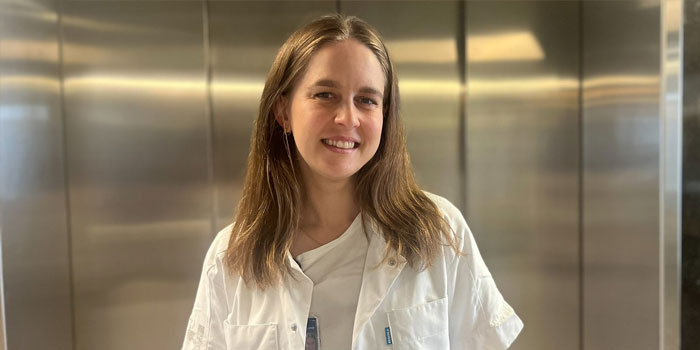
What is your background and current role in ReproUnion?
I am a Medical doctor and in February 2025, I began my PhD at the Fertility Clinic at Rigshospitalet, where I will use data from the ReproUnion Biobank & Infertility Cohort (RUBIC) in some parts of my research. Since April 2024 I have been a daily coordinator for the Danish female branch of RUBIC – a role that I first held in 2021.
Additionally, I have also been an active member of ReproYoung since last year’s relaunch. I was also part of ReproYoung in 2021/2022 when we organized a conference in Ystad, Sweden. I look forward to using this experience as we plan for a 2-day conference in 2026, for which we received a grant from the Novo Nordisk Foundation.
What kind of support best helps young researchers contribute to both innovation and patient care?
Throughout my time in RUBIC, I have witnessed how each young researcher involved in RUBIC has influenced and helped in shaping the project as it progressed. I have found the leading PIs of RUBIC to be receptive to our input, and they have actively involved us in decision-making.
I also think, a curious environment is important. Sometimes when we question a process or a system, we should reflect on how things could be improved and act on it. Innovation doesn’t always have to stem from the conclusions from the specific research we are doing; it can just as well arise from small things in our everyday clinical work or from elements used in research.
You also attended the recent ReproUnion/Smile e-Campus course about moving from research to implementation. What was your key takeaway?
It was a great chance to learn about an area I haven’t really been exposed to during my studies. I now have a better understanding of what healthcare entrepreneurship means, and what it takes to move from research to the implementation of new methods or technologies - and the important steps in this process. This also involves understanding health economics, the market needs, and how to organize a company, including balancing stakeholder interests.
Being one of the leaders in ReproYoung - what are your hopes for its impact on the next generation of researchers?
The sense of teamwork in ReproYoung is crucial for future research, and being part of this group gives us valuable connections across various areas of reproductive health. I hope ReproYoung will help people discover new projects and collaborations that can be carried out in the future.
Being part of ReproYoung gives me a great opportunity to connect with other young researchers in the field. The group is diverse, bringing together people from many different academic backgrounds. Everyone is motivated to make things happen, and passionate about their work.