
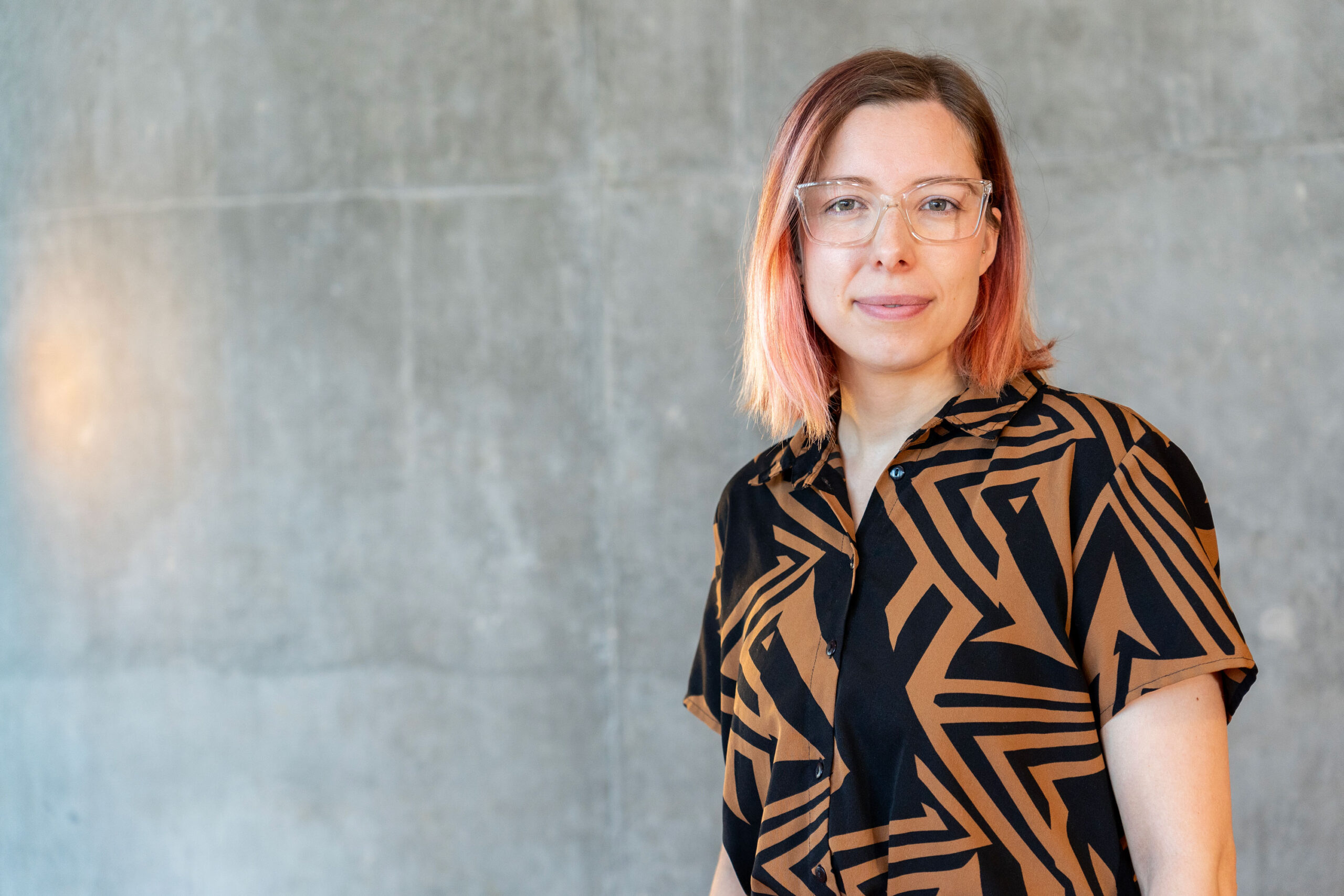
Meet Elena von Rohden, MD and PhD student at the Urological Research Unit at Herlev and Gentofte Hospital – and active in the ReproYoung network.
What is your scientific background?
I am a medical doctor and have always been deeply interested in both clinical and basic research. After moving from Germany to Denmark, I worked as a clinical trial manager for European-wide studies, which provided valuable insight into the behind-the-scenes work of clinical research. During the COVID-19 pandemic, I was also involved in large meta-analyses assessing newly developed COVID vaccines.
These experiences motivated me to pursue a PhD in male infertility research and begin leading my own scientific projects. My work has focused on both innovative surgical approaches aimed at restoring fertility in men who underwent gonadotoxic therapies during childhood, and integrated proteomic studies seeking to better understand and potentially improve treatment options for men with non-obstructive azoospermia (NOA), the most severe form of male infertility.
What motivated you to enter the field of male fertility research?
Reproductive health has always been an important topic for me, particularly from a female perspective. However, it was only when I started working clinically within urology and became involved in andrology research together with my colleague Christian F. S. Jensen that I fully realised the extent of the research gap in male infertility.
Male-factor infertility affects millions of men and couples worldwide. Yet, even when the underlying cause lies with the male partner, the burden of treatment often falls primarily on the female partner because of the limited treatment options available for men. For many men with severe infertility, we currently have no treatment options at all. I believe we can and should do better as a scientific community.
At the ReproTalk in August, you presented research on fertility preservation and transplantation of testicular tissue. Can you briefly explain the clinical challenge your research seeks to address?
My research addresses the challenge of preserving and restoring fertility in men who underwent gonadotoxic treatment before puberty, often as part of childhood cancer treatment. Because these boys have not yet started producing sperm, they do not have the opportunity to cryopreserve sperm for future use.
Instead, we offer the possibility of cryopreserving a small piece of testicular tissue containing spermatogonial stem cells, which have the potential to later develop into sperm cells under the right conditions. One possible approach is autologous transplantation of this tissue in adulthood. In our study, we modelled this procedure in healthy adult men as a proof-of-concept before translating it into a treatment option for patients who return to the clinic as adults to use their cryopreserved testicular tissue.
You are working closely with Christian Fuglesang S. Jensen and the wider team behind an Innovation Project on male fertility restoration. What have you learned from being part of such a multidisciplinary research environment?
Being part of such an interdisciplinary team has been both the most rewarding and the most challenging aspect of my research journey so far. It has taught me how to manage large projects spanning multiple countries, departments, and research disciplines, as well as how important effective communication and coordination are within a research collaboration.
I have also learned that research capable of making a real difference for patients requires broad perspectives and strong collaborations. Every member of the team contributes unique expertise and valuable insights that strengthen the overall project. At the same time, working across disciplines has highlighted how challenging interdisciplinary research can be and how much we could all benefit from better structures that facilitate collaboration and knowledge exchange across fields.
What has been the most valuable support for your development as a young researcher in reproductive medicine?
Without a doubt, the greatest support has been having such an engaged supervisor as Christian, together with the many PhD students, clinicians, and senior researchers I have had the privilege of working with and learning from.
For me, research happens in a community. Meeting researchers from different disciplines within reproductive medicine has shaped me not only as a scientist but also as a person. Being part of ReproYoung and other interdisciplinary research environments has provided support during the inevitable challenges that come with research, while also broadening my perspective on the many different aspects of reproductive health.