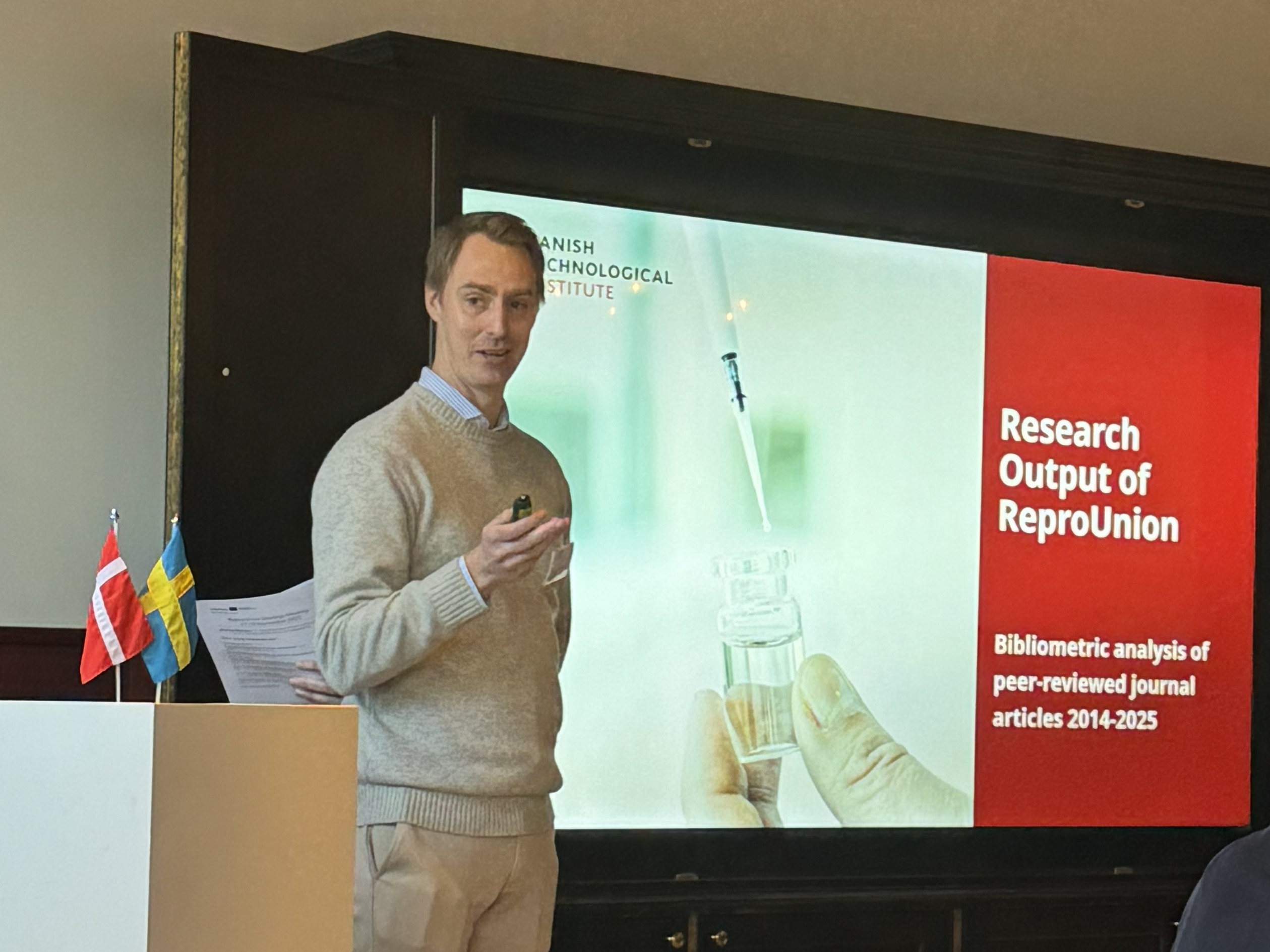
A recent report from the Danish Technological Institute takes the pulse of ReproUnion, one of the most influential cross-border research collaborations in reproductive health. Based on an extensive bibliometric analysis, it provides a data-driven insight into ReproUnion’s scientific footprint from 2014 to 2025.
The analysis reveals that over the past decade, ReproUnion has produced 218 peer-reviewed publications with contributions from 700 researchers across 31 countries. The average normalized citation score stands at an impressive 3.4, meaning that ReproUnion publications are cited three to six times more often than comparable research in the same field and year. The collaboration between Denmark and Sweden is particularly notable, with 24% of the publications produced cross-border the two countries – a figure well above the average in health and technical research.
The report highlights five key research areas: clinical strategies for assisted reproduction, biomarker and omics research, ovarian biology and fertility preservation, male fertility and social aspects of reproduction, and epidemiology and pregnancy outcomes. In these areas, ReproUnion has managed to combine high productivity with significant impact on clinical practice and public debate.
Publications peaked between 2018 and 2021 (127), mainly driven by PhD and postdoc projects. In recent years, the focus has shifted towards implementation, innovation, and societal impact. Therefore, the report emphasizes that publication data primarily reflects past activity, and the full effect of new initiatives – including the ReproUnion Biobank & Infertility Cohort (RUBIC) – will only become evident over time.
The report will be formally presented at the ReproUnion Summit on April 20, where the theme “Research and cross-border collaboration as a strong foundation for innovation” will be at the center of the discussion. Thomas Kjeldager Ryan, Senior Consultant at the Danish Technological Institute, will introduce the findings and highlight the importance of international partnerships for future breakthroughs.
The conclusion is clear: ReproUnion has built a strong, internationally collaborative foundation that creates value in reproductive medicine and inspires innovation across borders. This summary of the report invites interested parties to explore the publication list and reach out for further information on ReproUnion’s scientific contributions.