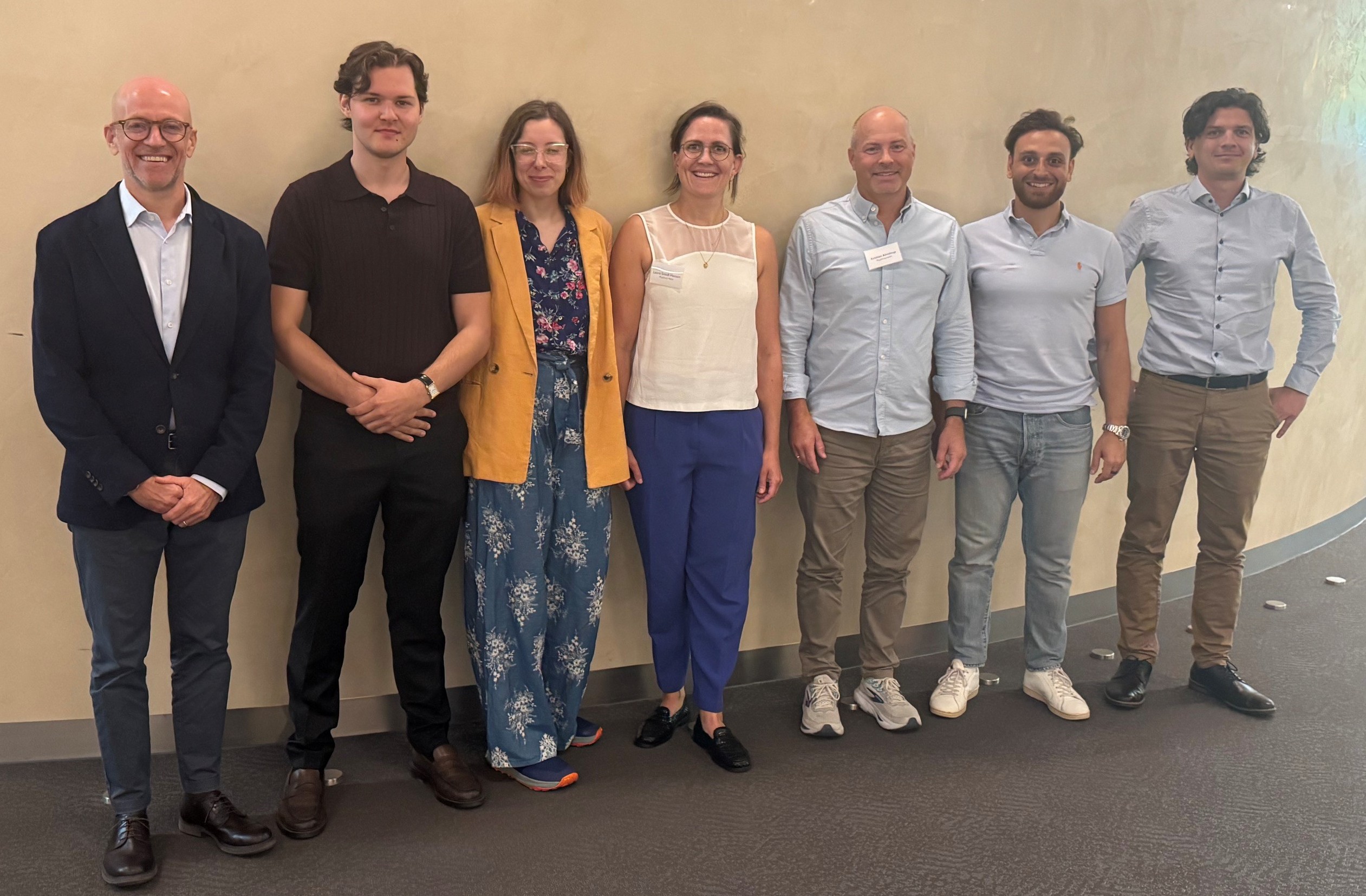
A striking 15-60% of male infertility cases remain unexplained, and there are currently no established medical treatments capable of increasing sperm cell production. These were among the facts setting the scene for the ReproTalk on 20 August, where clinicians, researchers and members of the wider reproductive health community gathered to discuss the latest advances in male infertility diagnosis, treatment and fertility preservation.
Organised by ReproYoung and hosted by ReproUnion, the event explored both current clinical approaches and emerging research that may help shape future treatment options.
Surgical innovations and fertility restoration
The first session focused on surgical innovations and fertility restoration, and a recurring theme was non-obstructive azoospermia (NOA), one of the most severe forms of male infertility and one of the most difficult to diagnose and treat. Christian Fuglesang S. Jensen from Herlev Hospital highlighted how the current treatment is still only leading to a baby for 15% of the couples, where the man has been treated.
Previous ReproUnion-supported research led by Christian included the first randomised clinical trial comparing different methods of surgical sperm retrieval in 100 Danish and Swedish men. The published results showed that sperm cells could be successfully retrieved in up to 43% of the patients. Invited guest speaker Saturnino Luján from Spain continued by sharing experiences and perspectives from ongoing research and clinical practice in Spain. His contribution underlined both the progress achieved in NOA and surgical sperm retrieval, as well as the need for new approaches capable of improving outcomes for patients.
Next, Angel Elenkov from RMC in Malmö presented ongoing work investigating how artificial intelligence may support surgical sperm retrieval procedures in the future. While still at an early stage, the work illustrates how digital technologies may eventually help clinicians identify the tissue most likely to contain sperm cells.
The session concluded with Elena von Rohden sharing insights into fertility preservation and transplantation of cryopreserved testicular tissue. The research addresses an important unmet need for boys who undergo gonadotoxic treatment before puberty, as well as men with severe infertility. Earlier this year, Elena presented new clinical insights into male fertility restoration at the European Association of Urology Congress, highlighting both the promise and the current challenges.
Together, the presentations reflected a clear conclusion from the subsequent panel discussion: while surgical techniques continue to improve, the field urgently needs new medical treatments capable of restoring sperm cell production.
New molecular insights create opportunities
The challenges highlighted in the first session provided the perfect transition to the second session on medical innovations and treatment opportunities.
Kristian Almstrup from Rigshospitalet opened the session by exploring the molecular frontiers of male infertility and discussing how genetics, epigenetics and advanced data analysis may improve our understanding of impaired sperm production.
His presentation built on years of research into the biological mechanisms behind male infertility. Previous ReproUnion-related studies have helped identify genetic causes of azoospermia/NOA to provide important new knowledge about why some men do not produce sperm cells. Kristian also highlighted the growing role of interdisciplinary research, combining genetics, bioinformatics and data science to better understand male reproduction.
Paving the way for future intervention studies
The ReproTalk event was moderated by Laura Smidt Hansen from Rigshospitalet, who also provided an overview of the previous ADAM study, run by Ferring Pharmaceuticals. She highlighted the continued need for studies that test new treatment approaches for male infertility and how large, well-characterised cohorts like the ReproUnion Biobank & Infertility Cohort (RUBIC) are important assets for future research.
“We still need studies that test new treatment approaches. RUBIC allows us to investigate infertility from entirely new perspectives and can help identify more clearly defined patient groups for future intervention studies,” concluded Laura Smidt Hansen.
The ReproTalk demonstrated both how far the field of male infertility has progressed and how many challenges remain unresolved. From surgical innovation and fertility preservation to molecular discoveries and large-scale cohort studies, the presentations showcased the research currently underway to improve diagnosis and treatment.
View pictures in this LinkedIn post.